Featured Studies

Office of Patient Recruitment

This web page makes it easy to search for featured research studies at the NIH Clinical Center. You can search for specific studies by entering keywords related to your symptoms in the search box or by using the sort and filter options.


To view a full list of all studies conducted at the NIH Clinical Center, visit Search the Studies.

Filter By

Visit Type

Patient or Healthy Volunteer

Age Group

Web Page Language

125 results
Tailoring Mobile Health Technology to Reduce Obesity and Improve Cardiovascular Health in Resource-Limited Neighborhood Environments

Tailoring Mobile Health Technology to Reduce Obesity and Improve Cardiovascular Health in Resource-Limited Neighborhood Environments

African-American women, ages 25-75, who are obese or overweight and pre-diabetic, are needed to participate in a research study at the National Institutes of Health (NIH) Clinical Center in Bethesda, Maryland. Researchers want to explore if the use of mobile technology and coaching can help increase physical activity.
Learn More
Phase II Trial Evaluating Nivolumab in Patients with IDH-Mutant Gliomas with and without Hypermutator Phenotype

Phase II Trial Evaluating Nivolumab in Patients with IDH-Mutant Gliomas with and without Hypermutator Phenotype

National Cancer Institute (NCI) researchers are conducting a study of patients with IDH-mutated gliomas. This study will test whether stimulating the immune system using the drug nivolumab can shrink recurrent IDH-mutant gliomas with and without hypermutator phenotype or increase the time it takes for them to grow or spread.

Learn More
Early Clonal Dynamics During Venetoclax Treatment for Chronic Lymphocytic Leukemia (CLL)

Early Clonal Dynamics During Venetoclax Treatment for Chronic Lymphocytic Leukemia (CLL)

The research study sets out to learn about changes in the genetic makeup of CLL during the early phase of treatment with venetoclax. The initial phase of venetoclax therapy can be medically and logistically challenging. Patients will receive expert medical care at the National Institutes of Health (NIH).
Learn More
Non-Alcoholic Fatty Liver Disease, the Hepatic Response to Oral Glucose, and the Effect of Semaglutide (NAFLD HEROES)

Non-Alcoholic Fatty Liver Disease, the Hepatic Response to Oral Glucose, and the Effect of Semaglutide (NAFLD HEROES) (En español)

Are you looking for a treatment for non-alcoholic fatty liver disease (NAFLD) or non-alcoholic steatohepatitis (NASH)? Researchers at the National Institutes of Health (NIH) seek volunteers to participate in a research study. For 30 weeks, participants will receive a medication called semaglutide (typically used for Type 2 diabetes), aiming to improve their liver disease and help them lose weight. The study hopes to better understand liver damage and its treatment in people with these conditions. (En español)
Learn More
Genotype -Phenotype Correlation of PKLR Variants with Pyruvate Kinase, 2,3-Diphosphglycerate and ATP Activities in Red Blood Cells of Patients with Sickle Cell Disease

Genotype -Phenotype Correlation of PKLR Variants with Pyruvate Kinase, 2,3-Diphosphglycerate and ATP Activities in Red Blood Cells of Patients with Sickle Cell Disease

Doctors at the National Institutes of Health (NIH) seek healthy volunteers (with or without a sickle cell trait) and patients with sickle cell for a research study. Sickle cell disease is a genetic blood disorder that occurs mainly in people of African descent. Study participants will have a one-time visit to the NIH to provide blood samples. Researchers hope this study will help us better understand sickle cell disease.
Learn More
The Use of 124-I-PET/CT Whole Body and Lesional Dosimetry in Differentiated Thyroid Cancer

The Use of 124-I-PET/CT Whole Body and Lesional Dosimetry in Differentiated Thyroid Cancer

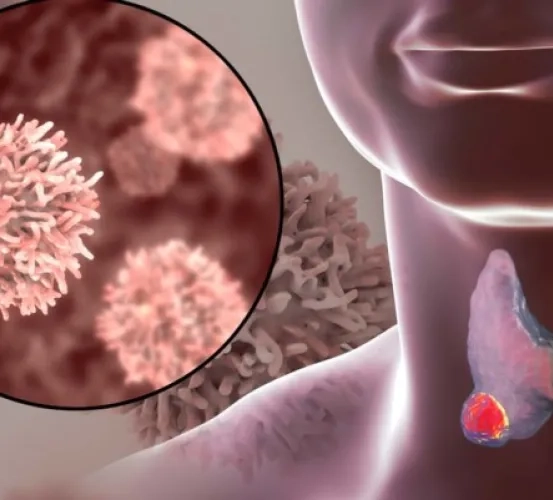
Doctors at the National Institutes of Health (NIH) seek patients with thyroid cancer that spread outside the thyroid - to the lymph nodes, lungs or bones. The standard treatment in such situation is therapy with radioactive iodine (RAI). In this study, doctors will assess a new imaging tool - 124I PET/CT, which enables evaluation of how much iodine goes into the tumor. The study goal is to compare how much iodine goes into cancer cells after two different methods of stimulation of RAI uptake.
Learn More
Low-Dose Danazol for the Treatment of Telomere Related Diseases

Low-Dose Danazol for the Treatment of Telomere Related Diseases

Researchers at the National Institutes of Health (NIH) are studying if the medication danazol can be used to treat people with short telomere disease who also have bone marrow failure, liver, or lung disease. In recent studies, danazol, at high doses, showed a positive influence on telomere length. Additional research is needed to learn more about the role of different doses of danazol on telomere disease as well as its effects on secondary diseases.

Learn More
A Phase II Study of Combined Treatment of Durvalumab, Bevacizuamab, Tremelimumab and Transarterial Chemoembolization (TACE) in Subjects with Hepatocellular Carcinoma (HCC)or Biliary Tract Carcinoma (BTC)

A Phase II Study of Combined Treatment of Durvalumab, Bevacizuamab, Tremelimumab and Transarterial Chemoembolization (TACE) in Subjects with Hepatocellular Carcinoma (HCC)or Biliary Tract Carcinoma (BTC)

Hepatocellular Carcinoma (HCC) is the fifth most common cancer in the world. Patients with advanced HCC survive an average of 6 to 9 months. Researchers at the National Institutes of Health are testing the use of an immunotherapy medication called durvalumab, with two other chemotherapy medications, doxorubicin-eluting beads and bevacizumab. This clinical research study will investigate if this combination of medications can stop the progression of HCC.
Learn More
Investigation of the Natural Progression of Clonal Hematopoiesis of Indeterminate Potential and Clonal Cytopenia of Undetermined Significance

Investigation of the Natural Progression of Clonal Hematopoiesis of Indeterminate Potential and Clonal Cytopenia of Undetermined Significance

Doctors at the National Institutes of Health (NIH) are conducting a study on patients with clonal hematopoiesis of indeterminate potential (CHIP). Patients with CHIP have a genetic mutation that has been associated with blood cancer. The study will look at CHIP and try to determine its relationship to blood cancers and heart disease. The study will also try to discover other new organs or diseases that may be linked with.
Learn More
Was this page helpful?