



Mission
The Interventional Radiology (IR) lab conducts multidisciplinary translational research in image-guided, minimally-invasive interventional therapies, while developing novel methods of integrating imaging into interventional procedures as well as drugs and devices to define new paradigms of "molecular interventions."
Vision
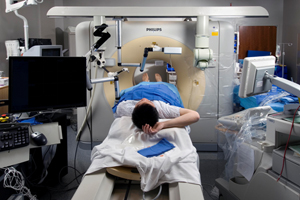 The IR Lab strives to be a leading IR research lab by developing and translating clinically relevant interventional tools from the basic lab bench test bed to initial validation studies in patients, while supporting the translational and clinical research and training programs of the CC and NIH Institutes.
Goals
- To design, develop, and deploy an Operating Suite of the Future in the NIH Clinical Center with multimodality image navigation, image-guided robotics, and seamless transition from one imaging modality to another. This unique facility is the world's first multimodality procedural suite of its kind. It combines many different types of imaging and treatment tools and uses them all together simultaneously to potentially better deliver personalized medical care by closing the gap between diagnosis and therapy.
- Bench-to-bedside development of "medical GPS" technology and systems for navigation of smart medical devices (like guidewires, catheters, needles, endoscopes, ultrasound cameras, ablation devices, surgical instrumentation, scalpels) that reference pre-operative images (CT, MRI, PET scans) to enable real-time feedback and use of imaging during minimally invasive procedures and surgery.
The Interventional Radiology (IR) Laboratory in the Radiology & Imaging Sciences Department is focused on interventional oncology. Our lab focuses on three areas of interest:
- "Smart" drug delivery using novel drug and device combinations
- Multi-modality image fusion and electromagnetic navigation and CT integrated robotics to implement treatment plans and as a tool for drug discovery
- The operating room of the future which combines novel technologies and imaging methods to try to improve minimally invasive, image-guided therapies.
Research in the Interventional Radiology (IR) lab is motivated by the fact that image-guidance and minimally invasive approaches have revolutionized the management of many common diseases. However, diagnosis and therapy remain distinctly separated from each other in both time and space. We believe that this gap between diagnosis and therapy can be narrowed by minimally invasive image guided therapies and with the application of novel guidance technologies and engineered vectors. All research efforts in the IR lab are developed with a clear translational route to the clinic and address areas of urgent clinical need.
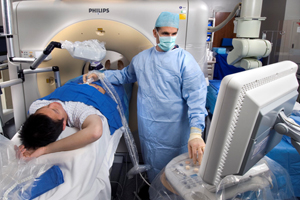
Examples of major research projects include:
- Combining temperature sensitive liposomes with RFA or MRI-guided high intensity focus ultrasound (HIFU) for the treatment of solid tumors
- Combining anti-angiogenic treatments with radiofrequency ablation (RFA) of solid tumors
- Developing imaging methods for targeted drug delivery systems
- Combining ablative techniques (RFA or HIFU) with immunotherapy of solid tumors
- "Smart" biopsy using electromagnetic navigation to correlate image and tissue for molecular-targeted therapies.