



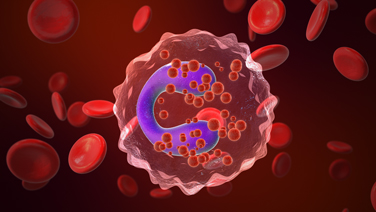
Hypereosinophilic syndrome (HES) is a blood disorder that causes high levels of eosinophils, which can damage organs such as the lungs, intestines, and skin.
National Institutes of Health (NIH) researchers are studying whether the FDA-approved drug dupilumab can improve HES symptoms in people whose current treatment isn't working well enough.
You May Qualify if You
- Are 18 or older
- Are currently receiving Fasenra, Nucala, or Cinqair
- Still have skin, sinus, lung, or digestive symptoms
What to Expect
- Adding dupilumab to your current treatment for 6–12 months
- Blood, urine, and heart function tests
- Surveys about how HES affects daily life
- Up to six clinic visits and seven remote visits over up to 48 weeks
Location
Study is conducted at the NIH Clinical Center in Bethesda, Maryland, accessible by the Metro Red Line (Medical Center station).
For More Information
NIH Clinical Center Office of Patient Recruitment
833-JOIN-NIH
TTY users dial 7-1-1
Email: ccopr@nih.gov
Or go online
Refer to NIH study # 001979-I
Department of Health and Human Services
National Institutes of Health Clinical Center (CC)
National Institute of Allergy and Infectious Diseases (NIAID)